Hypermarket 3D: Store Cashier
- 4.4
- Rating
- 50.00M
- Installs
- Free
- Price

 Analysis by App-foxy
Hypermarket 3D: Store Cashier looks simple at first, but its appeal comes from turning ordinary supermarket work into a sequence of small decisions. I step into the role of a cashier and manager, keep the store moving, and gradually deal with the kind of interruptions that make a short mobile session feel busier than expected. It is a simulation game from Sunday.gg, free to download, and aimed at Everyone, so the basic idea is easy to understand even if you have never played a management game before.
My first impression was that this is best treated as a quick, hands-on time filler rather than a deep business simulator. The supermarket setting gives the game a familiar rhythm: customers arrive, purchases need attention, and the shop has to keep functioning. That makes it comfortable to play in short bursts, especially when I want something more interactive than a passive puzzle but less demanding than a large strategy game.
The game has attracted a broad audience, with an average rating of 4.4 from around 311 thousand ratings and more than 50 million installs. Those figures suggest that its straightforward supermarket theme has reached far beyond a niche simulation audience. Still, popularity does not automatically make it suitable for everyone. The important question is whether you enjoy repeated, tactile shop tasks and gradual progression, or whether you need a complex economy with detailed planning.
You May Also Like

 Blood Strike: 2.5 Anniversary
Blood Strike’s Loadouts Turn Every Drop Into a Tactical Gamble
A close look at Blood Strike’s custom loadouts: how fast access to signature weapons reshapes its battle royale rhythm, rewards preparation, and narrows the gap between fights.

 Pandora - Music & Podcasts
Pandora’s Music Is Easy to Start, but Harder to Recover
Pandora’s strength is its low-effort path from a seed to a station. Its weak spot is how much confidence it asks you to place in connection, setup, and quiet recovery.

 8 Ball Pool
 Is Built on Rivalries, Rematches, and Routine
A close look at the rivalries, rematches, shared routines, and unanswered safety questions that turn a quick pool match into a persistent mobile community.

 Samsung Music
’s Quiet Strength Is Playing What You Already Own
Its reach comes less from spectacle than from dependable access to a personal library. That simplicity is both the app’s strongest retention engine and its ceiling.

 AccuWeather: Weather Radar
AccuWeather Review: A Quick, Clear Forecast for Everyday Decisions
For everyday plans, the best forecast is the one you can understand quickly. AccuWeather makes rain timing, radar, and local conditions easy to act on, with a few trade-offs.

 Hill Climb Racing
Why Hill Climb Racing Still Turns Crashes Into One More Run
A tiny car, a bumpy hill and one more upgrade: Hill Climb Racing keeps resurfacing because its simple chaos makes every near-miss feel personal.
More From Our News Desk
View All News


How the supermarket loop feels in everyday play
When I settle into the supermarket routine, I find it helps to focus on the next useful action rather than trying to make every part of the shop perfect at once. That small shift turns a busy stretch into a manageable sequence and makes each return to play feel easier to pick up.
A fast start that suits short sessions
The strongest part of the experience is how quickly I can understand what I am supposed to do. There is no need to learn a complicated fictional economy before the game becomes playable. The cashier role provides an immediate anchor, while the supermarket setting gives every task an obvious context. That clarity matters on a phone, where I may only have a few minutes and do not want to study menus before making progress.
In a typical everyday scenario, I might open the game while waiting for a coffee or during a short break. I can focus on the current shop activity, complete a few actions, and close the app without feeling that I have abandoned a long strategy plan. This makes it more approachable than many management games that punish players for leaving at the wrong moment or require constant attention to several screens.
The perceived speed is also helped by the compact nature of the concept. A supermarket is immediately recognizable, so the game does not spend its energy explaining an elaborate world. I can judge what matters by looking at the shop and responding to the activity in front of me. That directness is one reason I would recommend it to someone who wants a casual simulation rather than a spreadsheet disguised as a game.
There is a trade-off, though. A fast-to-understand loop can become repetitive if I expect every session to introduce a new type of challenge. The pleasure comes from keeping the store moving and improving my handling of its routine, not from discovering a huge narrative or a highly layered economic system. Players who enjoy repetition with small variations will probably settle into it more easily than players who need constant novelty.
What makes the cashier role more than a theme
The cashier identity gives the game a useful focus. Instead of presenting the supermarket as an abstract collection of statistics, it frames progress around visible work. I am not only thinking about whether the store is profitable; I am also reacting to the immediate flow of customers and transactions. That creates a more physical feeling than a traditional menu-driven tycoon game.
One practical tip is to treat each session as a rhythm exercise rather than rushing every action. When I try to move too quickly, I pay less attention to what the shop currently needs. A steadier approach makes the game feel more controlled and helps me decide whether I am actually improving or merely tapping faster. That distinction is useful because the game’s satisfaction comes from managing pressure, not simply from speed alone.
This also explains why the game can work for younger players under its Everyone rating. The premise is familiar, the language of the task is easy to grasp, and the supermarket environment is less intimidating than a combat or competitive setting. Adults may enjoy it for the same reason: it offers a harmless routine that can be picked up without a long commitment.
Where it differs from heavier simulation games
Compared with a traditional city builder or a detailed shop-management title, this game feels more immediate and less analytical. I do not approach it expecting the long-term planning depth of a full business simulator. Instead, the emphasis is on the experience of running the store from close range. That difference is important when choosing what to download.
If I want to design supply chains, compare complicated financial reports, or make decisions that reshape an entire virtual company, another simulation game would be a better fit. Here, the supermarket setting is valuable because it turns familiar actions into a playable routine. It is closer to a casual work simulation than a serious retail-management course.
It also differs from ordinary idle games. Idle titles often let progress continue with minimal input, while this game’s appeal depends more on my active involvement as a cashier. That makes it more engaging during a short session, but it also means I cannot expect the same hands-off experience. If I want to check a game once and leave it alone, this is probably not the right choice.
Heavy-use moments and the feeling of pressure
The most demanding moments are the busy stretches when several shop responsibilities seem to compete for attention. This is where the game’s simple idea gains tension. A quiet store lets me settle into a routine, while a crowded period tests whether I can prioritize instead of reacting randomly. I find these moments more interesting than the calm sections because they reveal whether I understand the shop’s flow.
A useful strategy is to avoid treating every visible task as equally urgent. I get better results when I identify the action that is currently blocking the most progress and handle that first. This sounds obvious, but it changes the experience from frantic tapping into basic queue management. The supermarket theme supports that lesson naturally: a small delay in one place can make the whole operation feel slower.
These busier moments are also where perceived performance matters most. When the screen is active and I am making several inputs, any hesitation feels more noticeable than it would during a quiet sequence. I would not judge the game only by its calm opening; the real test is whether the controls remain understandable when the store becomes crowded and my attention is divided.
For that reason, I prefer playing with a clear plan rather than trying to maximize every second. The game is more enjoyable when I accept that not every action needs to be perfect. This is a non-obvious strength: the supermarket setting makes small mistakes feel like part of the workday rather than a harsh failure state. That forgiving atmosphere helps keep the busy sections approachable.
Reliability and recovering from an interrupted session
Mobile games have to fit around real life, and this one makes the most sense when I think of it as a flexible session-based experience. A phone call, message, commute, or change of task can interrupt play at any time. I therefore avoid beginning a demanding sequence when I know I will need to put the phone down immediately. That is not a criticism of the theme; it is simply the reality of playing an active simulation on a mobile device.
My practical recovery habit is to pause mentally before leaving: I finish the immediate action if possible, note what the shop seems to need next, and return when I have enough attention to continue. This reduces the feeling of reopening the game without knowing what I was doing. The advice is especially useful for players who use the game in very short breaks rather than in one long sitting.
I also would not confuse a smooth-feeling session with unlimited reliability on every phone. The game is available for devices running Android 7.0 or later, which covers a wide range of hardware, but that does not mean every older device will feel identical. Screen responsiveness, available storage, background activity, and general device condition can all affect how comfortable a mobile game feels in practice.
When a phone is already struggling with several demanding apps, I would close unnecessary background activity before playing. That is a sensible step for any interactive game, but it matters more during the crowded supermarket moments, when delayed input is more frustrating. I would also keep the device charged for longer sessions, since screen-on play naturally asks more from a phone than reading or listening.
Device constraints and resource expectations
The minimum Android requirement of 7.0 makes the game accessible to many older phones and tablets. That is helpful for families sharing devices or for players who do not upgrade frequently. At the same time, an older operating system does not tell me exactly how modern the hardware must be for a comfortable experience. A phone that technically meets the software requirement may still feel less responsive if its processor, memory, or battery has aged.
For a lighter session, I would use a stable connection when the game needs to load content and avoid switching repeatedly between demanding apps. I would also give the game a little breathing room if the phone is hot. These are practical habits rather than claims about a specific technical design, but they help separate a device problem from a game problem when performance feels uneven.
Resource demands are easiest to notice through the length of a play session. A brief round is unlikely to feel like a major commitment, while extended play can make battery use and heat more relevant on older devices. If I were installing it on a budget phone, I would begin with short sessions and judge comfort for myself instead of assuming that the minimum operating-system requirement guarantees identical performance everywhere.
The game’s current version is 265.0, so it is clearly an actively presented product rather than an abandoned experiment. Even so, I would keep expectations realistic: a current version number does not promise that every device, network condition, or interruption will behave perfectly. My recommendation is to evaluate the actual feel on the phone you plan to use, especially if that phone is several generations old.
Free access, optional spending, and the right expectations
The game is free, which makes trying the supermarket loop easy. I can decide whether the routine suits me before committing money. There are in-app purchases ranging from $0.99 to $24.99 per item, so I would approach the store with a clear personal limit, particularly if children may use the device.
My advice is to play the opening sessions without assuming that every optional purchase is necessary. The most useful way to judge the game is to see whether the basic cashier routine is enjoyable on its own. If I already like managing the shop, optional spending becomes a choice rather than a requirement for discovering the appeal. If I do not enjoy the core loop, purchases will not solve that mismatch.
This is another area where the game differs from a paid premium simulation. A free download lowers the barrier to entry, but optional purchases can make the overall experience feel less predictable for players who prefer paying once and receiving a complete package. Someone who dislikes in-app economies may be happier with a premium management game, even if it offers less casual accessibility.
Who should play it and who should skip it
I would recommend this game to people who enjoy familiar work-themed simulations, short active sessions, and the satisfaction of keeping a small operation under control. It is particularly suitable for players who want a gentle introduction to management ideas without a dense tutorial or a complicated fictional setting. The Everyone rating also makes it a reasonable family-friendly option, provided an adult handles expectations around optional purchases.
It can also suit someone who likes practicing prioritization in a low-stakes environment. The supermarket gives immediate context to the decisions, while the cashier role keeps the action grounded. I find that more engaging than an abstract task list because each action feels connected to the shop’s daily rhythm.
I would skip it if I need deep customization, long-term economic planning, competitive multiplayer, or a strong story. I would also look elsewhere if repetitive routines quickly lose their charm. The game’s strengths are its accessibility and directness, and those same qualities limit its appeal for players who want a large, constantly changing simulation.
My performance verdict after weighing speed and stability
My overall view is that Hypermarket 3D: Store Cashier works best as a responsive-feeling, casual supermarket simulation that can fill a short break without demanding a long tutorial. Its perceived speed comes from a clear premise and immediate tasks, while its heavier moments come from maintaining the shop when activity builds. That combination gives it more character than the store theme alone suggests.
The main limitation is not that the concept fails; it is that the routine may not offer enough variety for players seeking a deep management game. Device age and background load can also influence comfort, so I would be more cautious on older hardware and during long sessions. Those are fair trade-offs for a free game designed around quick, understandable interaction.
After considering the audience, the Android requirement, the optional spending, and the difference between casual and serious simulation, I see it as an easy recommendation for the right player rather than a universal one. If you want a light supermarket routine with active cashier work, this is worth trying; if you want a complete retail strategy sandbox, choose a deeper alternative instead.
Sunday.gg has built the game around a very recognizable fantasy: taking control of a supermarket and making its daily activity run smoothly. That simplicity is its most dependable advantage. I can open it, understand the current goal, and get into the rhythm quickly. For me, that makes it a pleasant choice when I want a small simulation with visible pressure, modest commitment, and enough hands-on activity to keep a spare few minutes interesting.
FAQs for Hypermarket 3D: Store Cashier
01What is the main objective of Hypermarket 3D: Store Cashier?
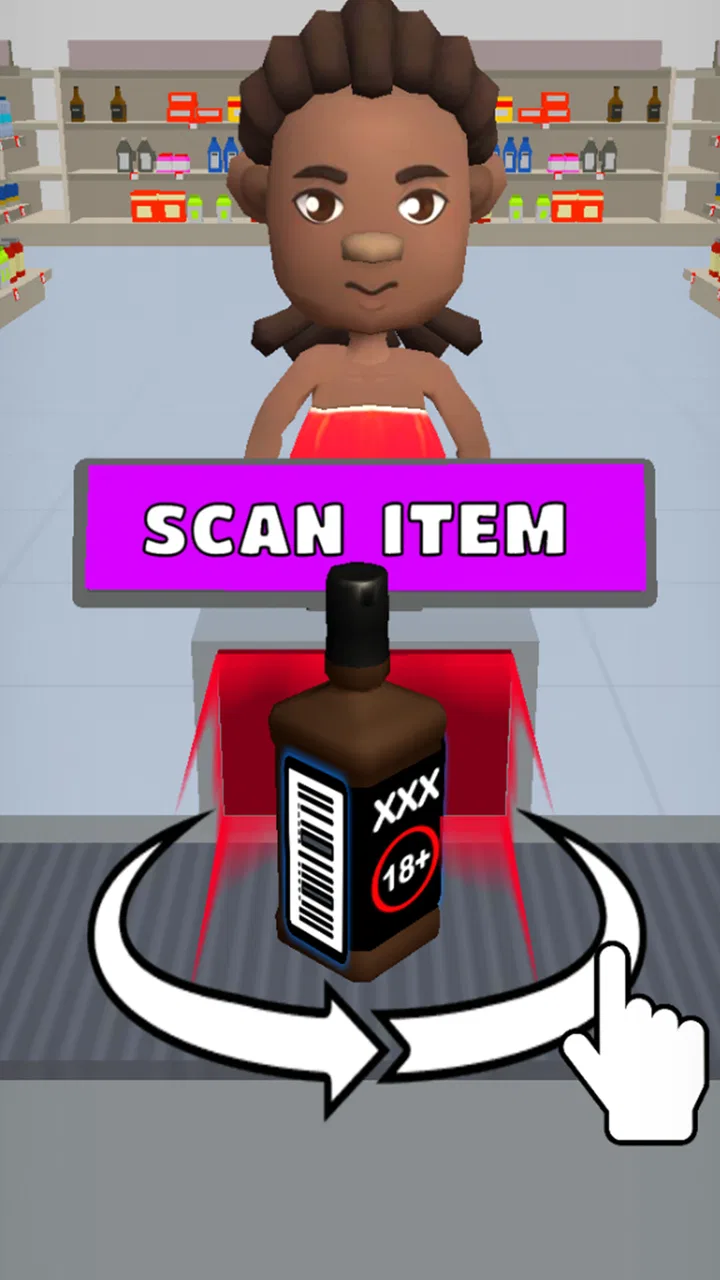
Hypermarket 3D: Store Cashier is a simulation game where players take on the role of a cashier in a bustling hypermarket. The primary objective is to manage various tasks such as scanning items, handling payments, and keeping customers satisfied. Players must balance speed and accuracy to ensure smooth operations and advance through levels.
02Is Hypermarket 3D: Store Cashier free to play?
Yes, Hypermarket 3D: Store Cashier is free to download and play on both Android and iOS platforms. However, it does offer in-app purchases, which can enhance the gameplay experience by unlocking additional features or speeding up progress. Players can enjoy the core game without spending money, though.
03What are the main features of Hypermarket 3D: Store Cashier?
The game features a variety of tasks that simulate real-life cashier duties, including scanning products, managing queues, and processing payments. It offers colorful 3D graphics, intuitive controls, and progressively challenging levels. Additionally, there are different hypermarket sections to explore, each with unique items and challenges.
04Does Hypermarket 3D: Store Cashier require an internet connection?
While Hypermarket 3D: Store Cashier can be played offline, some features such as in-app purchases and updates require an internet connection. Playing online also allows access to leaderboard rankings and potential future events or promotions. Offline play is suitable for basic gameplay, but online connectivity enhances the experience.
05Are there any ads in Hypermarket 3D: Store Cashier?
Yes, the game includes ads, which help support the free-to-play model. Ads may appear between levels or as optional views for rewards like extra coins or bonuses. Players looking to remove ads can often do so through in-app purchases, providing an uninterrupted gaming experience.
Pros
- Engaging gameplay with varied tasks.
- Simple controls suitable for all ages.
- Vibrant graphics enhance user experience.
- Regular updates with new content.
- Offline play available for convenience.
Cons
- Repetitive tasks may become monotonous.
- In-app purchases can be frequent.
- Ads can interrupt gameplay flow.
- Limited customization options.
- Some levels require patience to complete.

Hypermarket 3D: Store Cashier
Gallery